In Conversation with Rosa, Founder of Ro Projects


On the Artist
You’re both a practising artist and an interior designer. How did your creative life begin, and how has painting shaped the way you see colour and space today?
Ro: I have always been drawn to making things. As a child I was constantly drawing and painting, and that instinct never really left me. Painting came first, and interior design grew out of a desire to work with space, and from an understanding of how deeply architecture and interiors shape people’s lives.
Painting has deeply shaped how I see colour and space. It has taught me to look at colour as something living and relational, not fixed or flat. When creating an artwork or designing a space, I think in terms of layers, undertones, light, and how colours shift depending on what sits next to them. Painting has also made me very sensitive to composition, balance, and negative space, which translates directly into how I design interiors.
On Place & Landscape
You grew up in Mallorca, and that sense of place feels very present in your work. In what ways has the island’s light, landscape and material palette influenced your artistic language over the years?
Ro: Mallorca has had a profound influence on how I see and experience the world. The quality of light there is very particular; it is clear and strong, and it changes how colours behave. The landscape is deeply evocative: dry earth and lush valleys, pale limestone and deep shadows, the blues of the sea and sky, and the dusty greens of olive and pine trees, all washed in warm Mediterranean light.
This sensibility has stayed with me in a very instinctive way. I am drawn to natural, slightly muted colours, to materials with texture and depth, and to spaces that feel grounded rather than overly polished. There is also a sense of calm and slowness in Mediterranean life that I try to carry into my work, creating spaces that feel restful, balanced, and connected to nature.


On Colour
Colour feels central to everything you do. When you’re choosing or developing colours, what are you paying attention to? Mood, light, context, something else?
Ro: Colour sits at the centre of how I work. I am drawn to it not as something decorative, but as something with depth, structure, and emotional weight. Through painting, I learned to understand colour at a more fundamental level, from pigments and mixtures to how different tones behave and relate to one another. For me, colour never exists in isolation. When designing a space, I always begin by thinking about light, because it completely transforms how a colour is perceived. From there, I think about mood, atmosphere, and how a space is lived in.
Context is essential. A colour has to make sense within the architecture, the materials, and its surroundings. I pay close attention to how colours sit together, their undertones, and how they shift throughout the day. I am far more interested in subtle, complex colours than in obvious statements.
On the Studio
What led you to start Ro Projects, and what kinds of projects or clients do you feel most aligned with now?
Ro: I started Ro Projects because I wanted to create a studio that approached interiors in a thoughtful, narrative, and layered way. I was interested in working slowly and carefully, and in creating spaces that truly reflect the people who live in them, rather than following trends or a predetermined aesthetic.
Today, I feel most aligned with clients who value quality, craftsmanship, and long-term thinking. People who want homes that feel calm, personal, and deeply considered, and who enjoy the process of shaping something meaningful over time.


On Longevity for Interiors
Ro Projects speaks about creating interiors that feel calm, thoughtful and good to live in. What does “longevity” mean to you in practice when you’re designing a space?
Ro: For me, longevity is about creating spaces that continue to feel good to live in over time. It comes from focusing on fundamentals — light, proportion, flow, and materials that age well and gain character — rather than chasing novelty. We always pay close attention to how a space is experienced day to day — how it holds moments of activity and rest, how it supports routines, and how it feels to return to. When these elements are carefully balanced, a space can evolve with the people who live in it, remaining meaningful and supportive for many years.
On Practical Spaces
Kitchens are very functional, hardworking spaces. How does your studio balance the more expressive, artistic side of your practice with such everyday demands?
Ro: Kitchens are at the heart of daily life, where practical tasks and moments of connection unfold side by side. Understanding how they function in practice is always the starting point. We pay attention to movement, storage, durability, and flow, and then let colour, material, and proportion shape the atmosphere and give the space its character — always in a way that supports everyday life rather than competing with it. When these practical foundations are in place, the more expressive elements can emerge naturally, creating kitchens that are both functional and inspiring, spaces you enjoy being in.


On the Collaboration
Do you remember your first conversations with HUSK about this collection? In what ways did you feel aligned, and what sparked the idea to collaborate?
Ro: When Husk first approached us, they had seen the nature-inspired palettes I work with in both my artwork and interiors, and felt a similar approach could translate beautifully into a colour range. It was immediately clear that we shared a love of colour, nature, thoughtful design, and a deep respect for craftsmanship. We were both excited by the idea of creating tones that felt considered but not obvious, colours that reveal subtle depth over time and feel naturally at home together.
On Translating Art into Product
What was it like turning something as fluid and personal as painting into a physical, material product? Were there any surprises or challenges in refining the colours into a cohesive range?
Ro: It was both exciting and challenging. Painting is very instinctive and emotional, and colour on canvas behaves very differently to colour on a large, flat, surface. The main challenge was to retain the soul and depth of the colours while making sure they functioned practically in real kitchens.
My painting process is usually experimental — mixing colours intuitively and discovering unexpected, beautiful results. For this project, the process involved more testing: refining undertones, seeing colours in different lights and combinations, and noticing how small adjustments could completely change the character of a shade. While more controlled than painting, it was still guided by the same emotional and intuitive instincts, carrying that sense of discovery into a new context.


On the Palette
Rather than hero shades, the palette feels cohesive and relational. How did you develop colours that work in conversation with each other?
Ro: The palette is drawn from nature, so the colours naturally relate to one another, working as a harmonious system rather than as isolated shades. Each colour was developed in conversation with the others, exploring subtle shifts in undertone, depth, and character. Many sit between categories, neutral and accent, warm and cool, earthy and refined, giving the palette flexibility while maintaining a strong sense of cohesion.
On Everyday Life
What do you hope people notice or feel when they live with these colours day to day?
Ro: I hope these colours bring a sense of joy and grounding to everyday life. Some shades are more expressive, while others are quieter, but all are understated and rooted in the natural world. Used individually, each colour brings a subtle presence to a space. When combined, the tones reveal layers, relationships, and depth. Their nuanced character allows them to sit easily alongside furniture, artwork, and other materials, helping a space feel balanced, calm, and inviting.

On Pairings
Are there any particular pairings of colours in the palette that really speak to you? If you were selecting one or two of the shades for your own kitchen, which are you most drawn to?
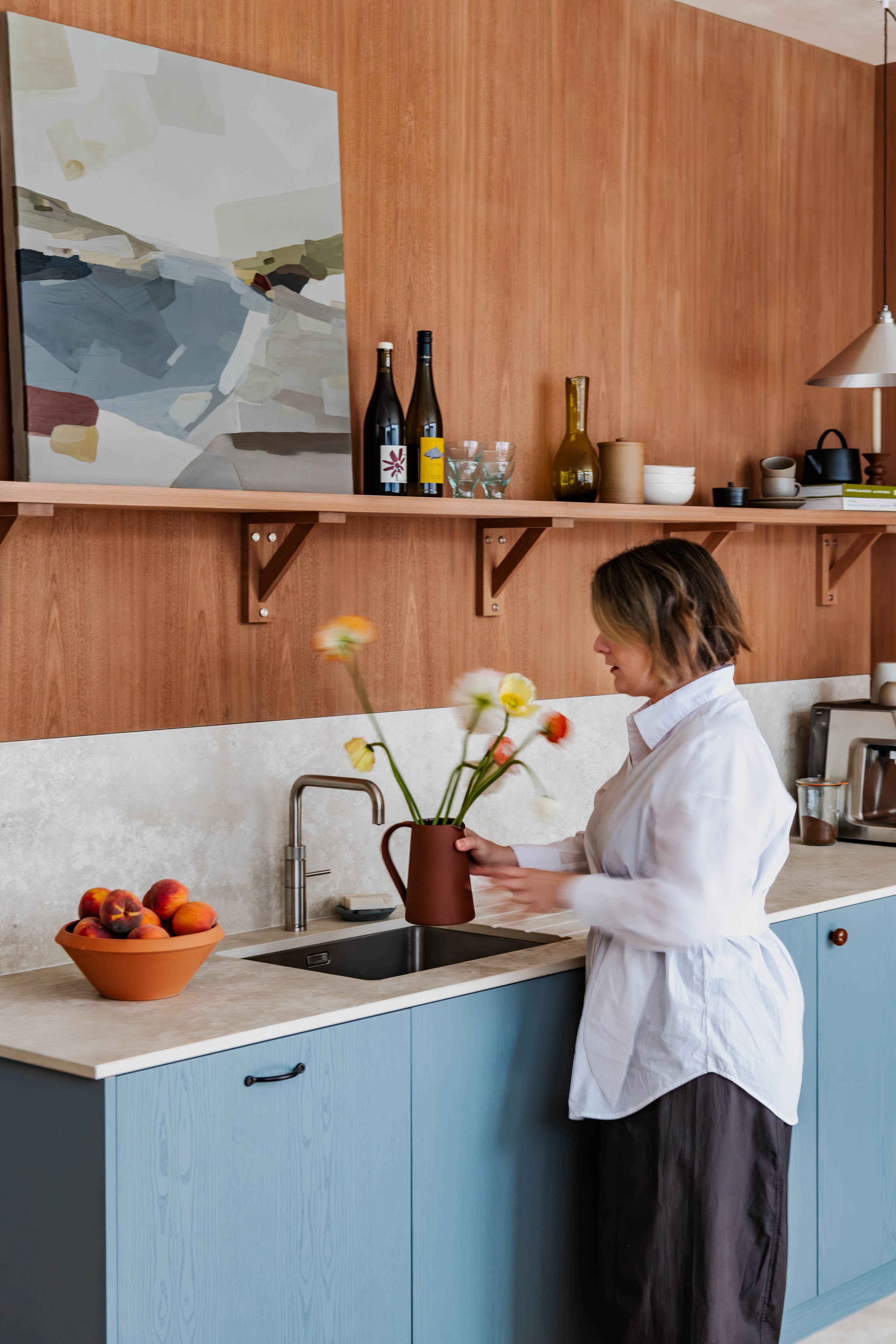
Ro: I am always drawn to combinations that feel quietly rich rather than overtly bold. I particularly love pairing one of the deeper, more grounded tones with a softer, lighter shade, as it creates a sense of balance and depth without feeling heavy.
For my own kitchen, I would choose a lighter, more mineral shade such as Horchata or Mares as a backdrop, and pair it with one of the warmer, earthy tones like Tinto or Tramuntana to introduce contrast. That interplay between warmth and lightness feels very natural to me, and creates a space that feels both calm and anchored.
If I wanted something more expressive, and to fully colour-drench a room, I would combine Tinto and Argila.
Want to explore Ro Projects interior design studio or browse Rosa’s paintings?


